
Why “Closing More Deals” Won’t Fix Your Business
Heffl
April 4, 2026

For most growing service businesses, the growth strategy sounds straightforward:
Close more deals → increase revenue → scale operations.
On paper, it makes complete sense.
But in practice, many teams experience something very different. Even after improving their sales process and increasing conversions, they find themselves dealing with delayed projects, overwhelmed teams, and inconsistent delivery.
At some point, the question shifts from “Why aren’t we closing enough deals?” to:
“Why does everything feel harder after we close them?”
The answer lies in a part of the business that often gets overlooked—the transition from sales to execution.
The Misconception Around Growth
Closing deals is a visible milestone. It’s measurable, trackable, and easy to optimize.
Execution, on the other hand, is layered and complex. It involves coordination across people, timelines, expectations, and dependencies.
In smaller teams, this complexity is manageable. Information flows informally, and team members rely on direct communication to keep things moving. But as the volume of deals increases, this informal system begins to break down.
What worked with 5 clients doesn’t work with 25.
What worked with 2 team members doesn’t work with 10.
The issue isn’t effort. It’s structure.
What Actually Happens After a Deal Is Closed
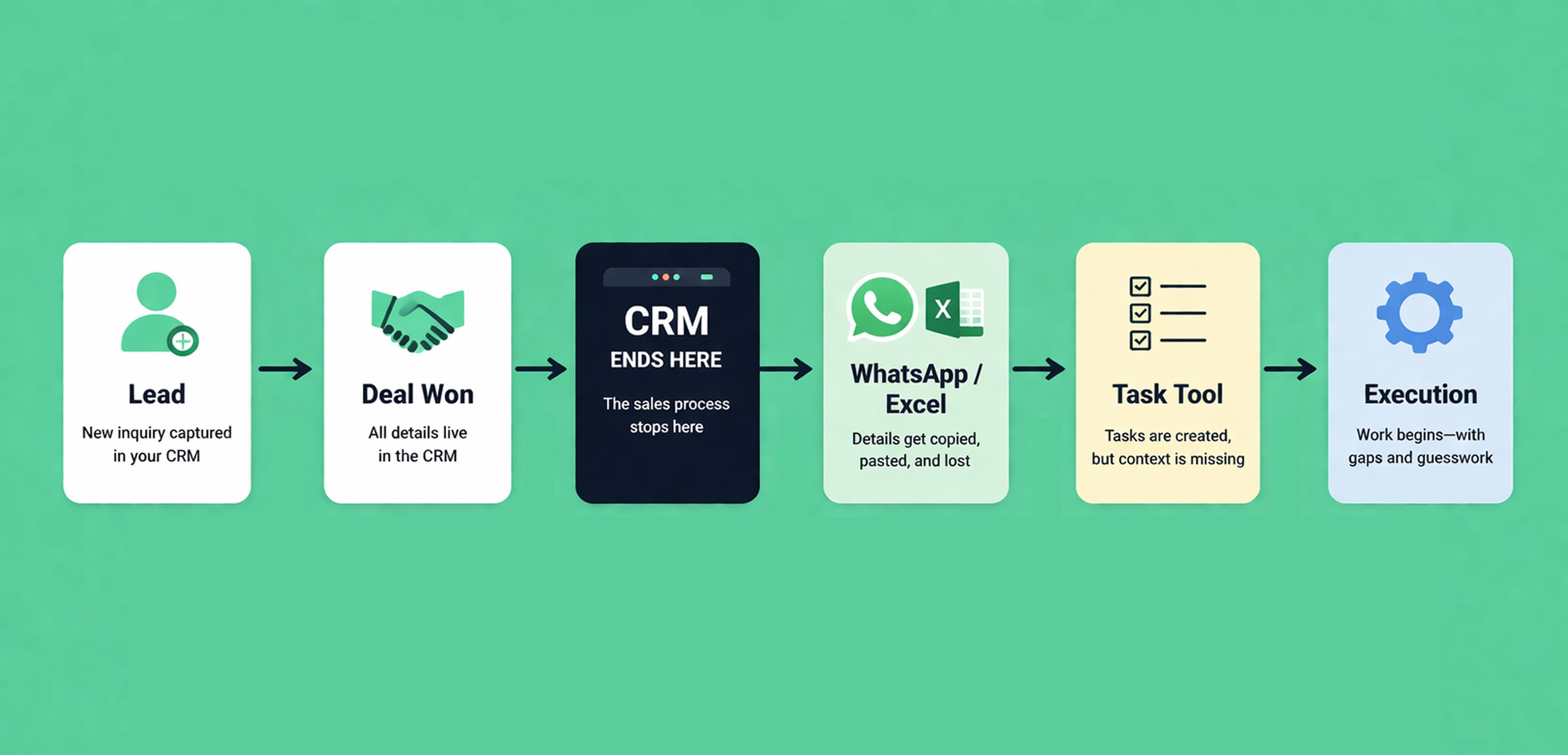
In many businesses, the moment a deal is marked as “won” is where the system quietly resets.
The sales process—often well-managed inside a CRM—comes to an end. From there, execution begins in a completely different environment.
Typically, the workflow looks something like this:
-
Deal details are stored in the CRM
-
Information is shared manually with the operations team
-
Tasks are created in a separate tool (or spreadsheet)
-
Communication continues over messaging platforms
-
Progress is tracked inconsistently
At each step, information is either duplicated, simplified, or lost.
Why More Deals Start Creating More Problems
When this fragmented workflow is already in place, increasing the number of deals doesn’t improve outcomes, it amplifies existing inefficiencies.
Each new deal introduces:
-
Additional client requirements
-
More coordination between team members
-
Increased dependency between tasks
-
Higher expectations for timely delivery
Without a structured system to support this, teams begin to rely more heavily on memory, follow-ups, and reactive communication.
This leads to a situation where:
-
Work is always in progress, but rarely on track
-
Team members stay busy, but output doesn’t scale proportionally
-
Managers spend more time coordinating than improving
Growth, instead of feeling like progress, starts to feel like pressure.
The Hidden Costs of a Weak Execution System
The impact of this isn’t always immediate, but it is consistent.
1. Delayed Revenue Realization
When projects are delayed, billing is delayed. Even if deals are closed successfully, cash flow becomes unpredictable.
2. Inconsistent Client Experience
Clients experience gaps between what was promised during sales and what is delivered during execution. Over time, this affects trust and retention.
3. Increased Operational Load
Teams spend a significant portion of their time clarifying details, chasing updates, and resolving avoidable issues.
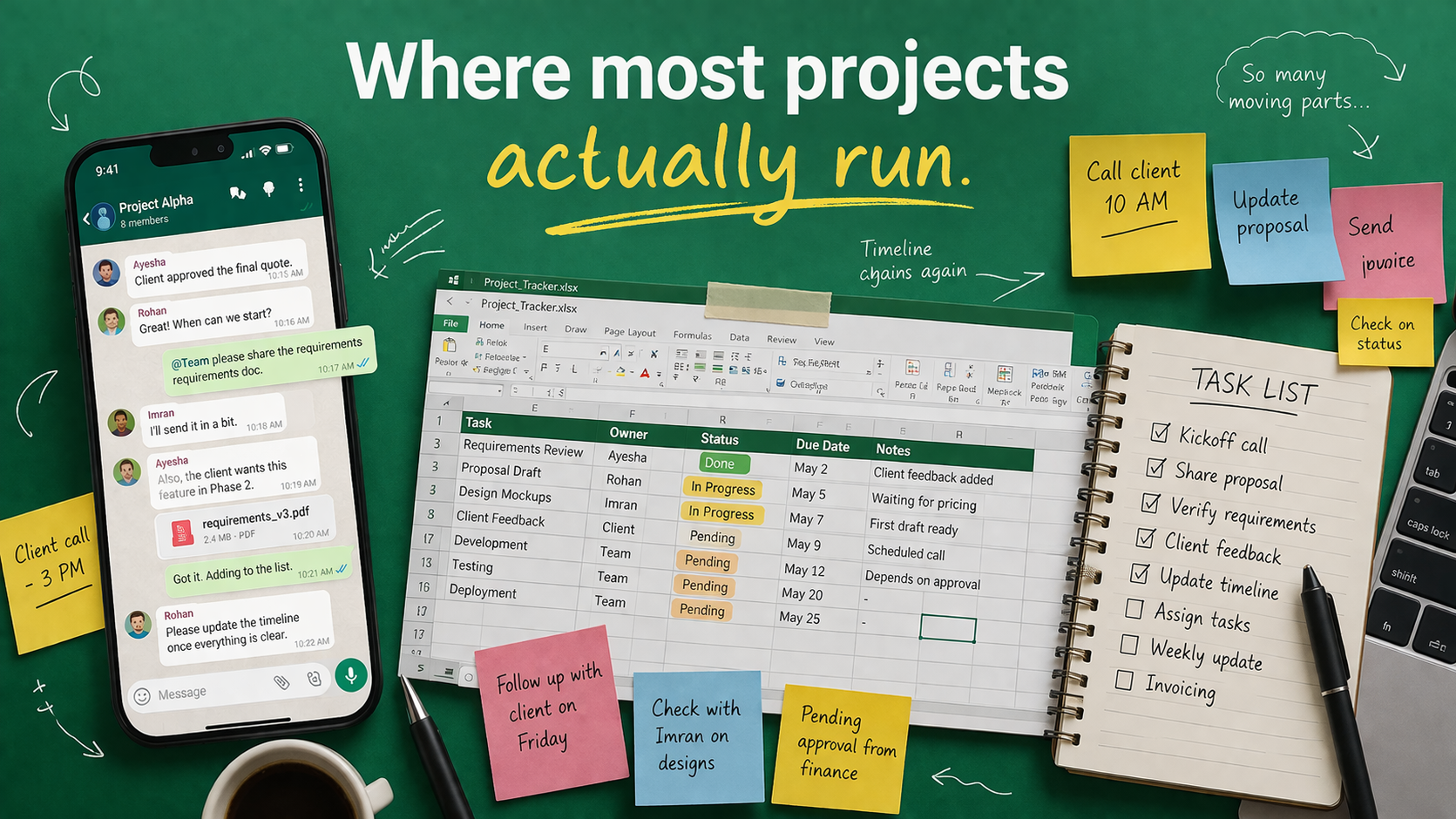
4. Lack of Visibility
Without a centralized system, it becomes difficult to answer basic questions:
-
What is currently in progress?
-
Which projects are delayed?
-
Who is responsible for what?
The Gap Between Sales and Execution
One of the most critical issues is the disconnect between the information collected during sales and the information required for execution.
During the sales process, teams gather valuable context:
-
Client requirements
-
Scope of work
-
Deadlines and expectations
However, if this information doesn’t flow directly into the execution phase, the team essentially starts from scratch.
This results in:
-
Repeated conversations
-
Missed details
-
Misaligned expectations
Most CRMs are optimized for managing relationships and tracking deals. But they are not designed to handle the full lifecycle of a client engagement.
Why Task Management Alone Isn’t Enough
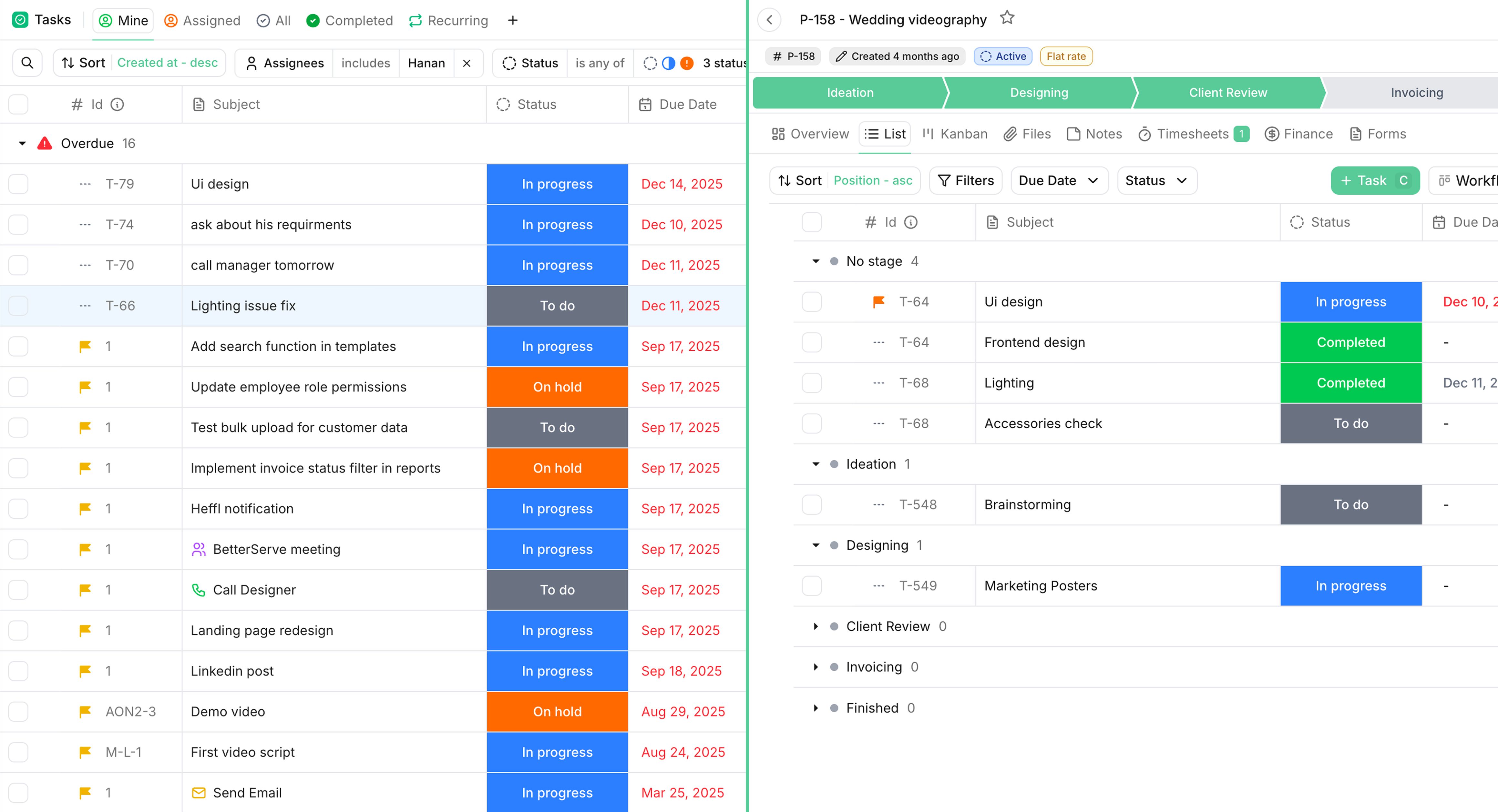
To bridge this gap, many teams adopt task management tools. While these tools help organize work at a surface level, they often fall short in managing complex client projects.
Tasks are useful for tracking individual actions, but they lack:
-
Context from the original deal
-
Clear relationships between activities
-
Visibility into overall project progress
Without these, teams end up managing a list of disconnected actions rather than a cohesive project.
What Actually Drives Sustainable Growth
The businesses that scale successfully do not just improve how they close deals. They improve how they deliver after the deal is closed.
This requires a system where:
-
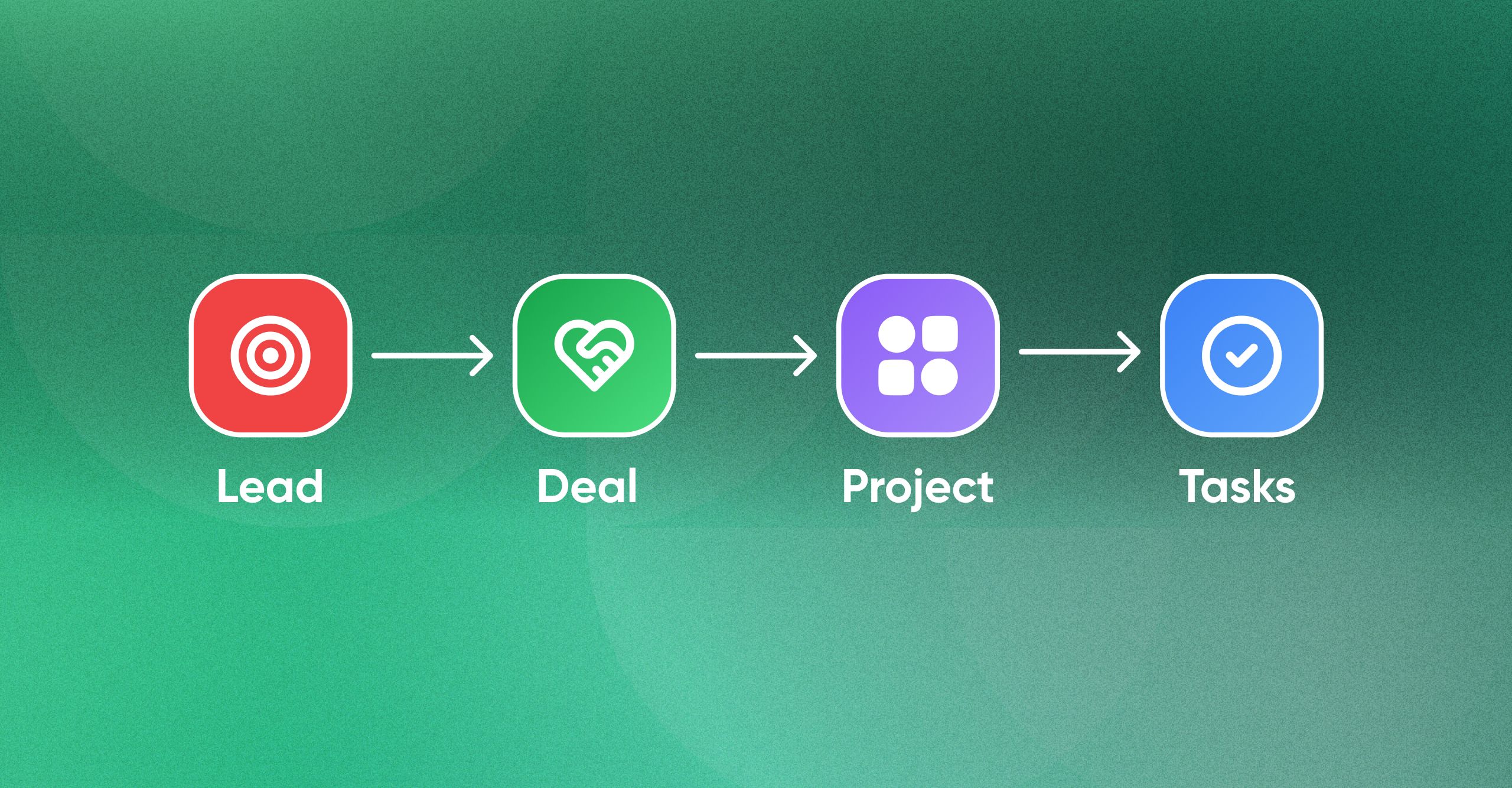
Sales and execution are connected
-
Information flows without manual transfer
-
Projects are structured from the start
-
Teams operate with shared visibility
Instead of focusing on isolated tools, the focus shifts to building a continuous workflow.
What Changes When the System Is Connected
When the transition from deal to execution is seamless, several improvements become immediately visible:
Faster Project Kickoff
Work begins without delays because all necessary information is already available.
Reduced Miscommunication
Teams no longer rely on fragmented conversations to understand requirements.
Clear Accountability
Each stage of the project has defined ownership, reducing confusion and overlap.
Improved Visibility
Managers can track progress in real time without chasing updates.
Rethinking the Growth Strategy
Closing more deals is often treated as the primary driver of growth. But without a strong execution system, it becomes a multiplier of inefficiencies rather than results.
A more effective approach is to view growth as a combination of two equally important parts:
Winning the client
Delivering consistently after the sale
Focusing on both ensures that revenue is not just generated, but also realized and sustained.
Conclusion
The ability to close deals is important, but it is not what defines a scalable business.
What truly matters is what happens after the deal is closed—how efficiently work begins, how clearly it is executed, and how consistently it is delivered.
Businesses that recognize and address this shift move from reactive operations to structured growth.
And in that transition, they discover that the real bottleneck was never sales.
It was the system behind it.
Where Heffl Fits In
Heffl is built around this exact gap.
Instead of separating CRM and project execution, it connects them—allowing teams to move from deal to delivery without losing context, time, or control.
The result is not just more organized work, but a system that can support growth without adding complexity.
